
Contact
The Double T-Shaped Knowledge Architecture:
Where Human and Machine Intelligence Converge
In an era where organizational silos strangle innovation and knowledge fragmentation limits growth, we need a fundamentally new approach to how expertise flows through companies. The Double T-Shaped Knowledge Architecture represents this paradigm shift: A framework where human collaboration patterns and artificial intelligence mirror each other to create exponential knowledge leverage.
Inspired by the Bauhaus vision, the Cathedral Principle recognizes that great works require both craftsmen and architects. DataCards enables this through two modes of expertise:
- Specialists dive deepData scientists perfecting algorithms, domain experts crystallizing insights into notebooks. They publish their work with pride.
- Generalists connect wideSolution architects orchestrating technical landscapes, program managers synthesizing strategic vision across decks. They navigate and drill down through layers of expertise.
This information zoom creates transparent collaboration across departments, breaking down silos through structured knowledge exchange.
DataCards implements the same T-shaped pattern at the machine layer:
Specialist AI agents master individual notebooks, becoming domain-specific experts that learn from human specialists with surgical precision.
Generalist AI assistants understand entire project instances, bridging contexts and orchestrating specialist AI capabilities across the platform.
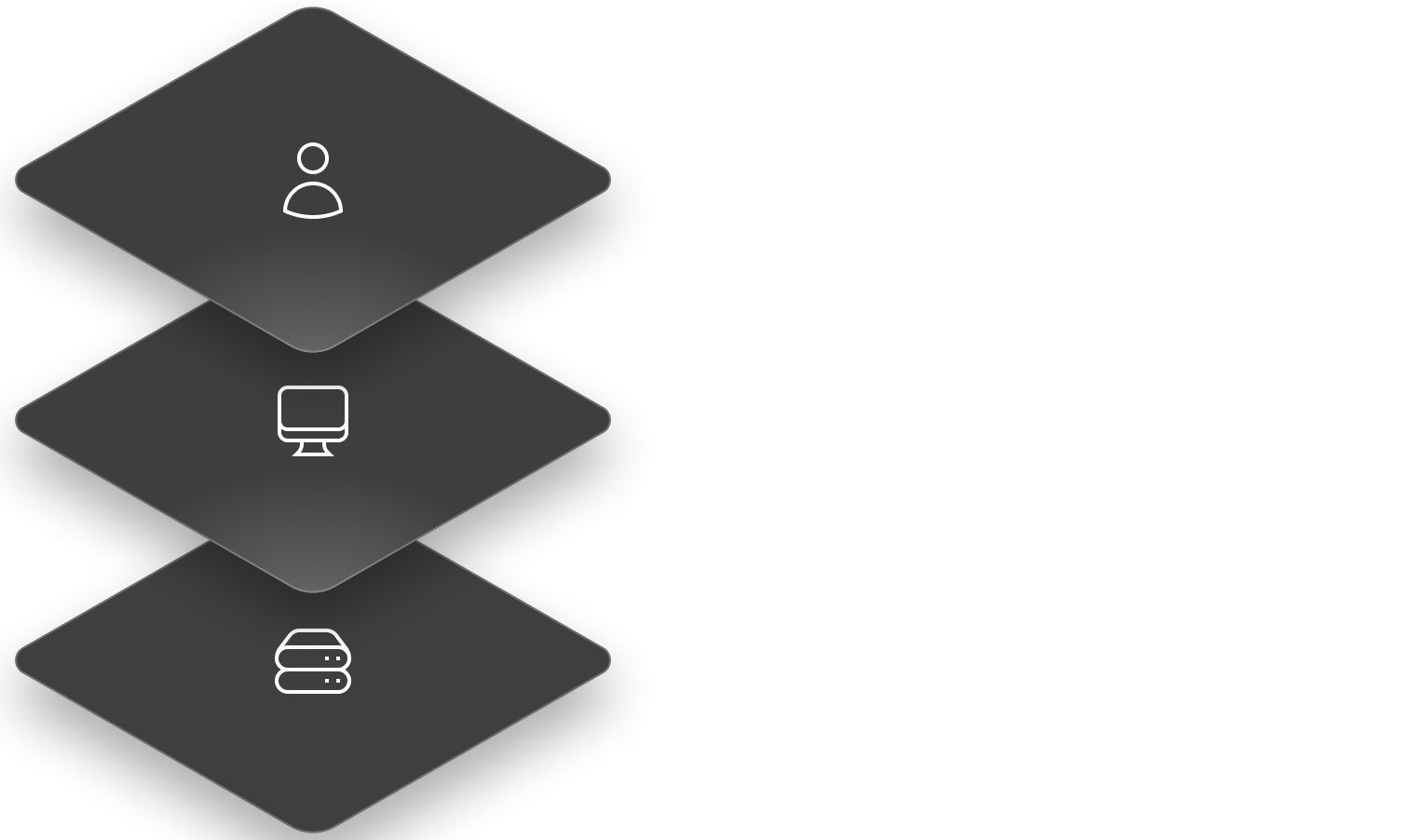
This creates a three-layer architecture: human-to-human collaboration, human-to-machine assistance, and machine-to-machine coordination. Each layer reinforces the T-shaped principle, compounding knowledge vertically.
Here's the elegant twist: When AI agents build directly upon your notebooks, poor maintenance immediately degrades AI performance. This creates a natural expert motivation loop—specialists improve their work because their AI partner's effectiveness depends on it.
The result? Compound knowledge effects. Well-structured notebooks become training grounds for AI agents that multiply your expertise across the organization. Documentation quality pays exponential returns through AI-powered knowledge distribution.
The Double T-Shaped Knowledge Architecture recognizes that the future of work isn't human or machine intelligence—it's the deliberate architecture of how they interweave.
When specialist humans teach specialist AI agents, and generalist humans coordinate with generalist AI assistants, expertise flows frictionlessly from depth to breadth, amplified at every layer by intelligent automation.
This is how modern cathedrals get built—through infrastructure where craftsmen and architects, depth and breadth, human and machine intelligence all collaborate toward a singular vision.
DataCards?
DataCards is a collaborative platform where data science meets organizational intelligence. It combines the flexibility of notebooks and AI agents with drag and drop frontend components, creating a workspace where specialists dive deep into technical work while generalists maintain strategic oversight.
The Human T-Shape: The Cathedral Principle
The Machine T-Shape: AI That Mirrors Human Patterns
The Excellence Engine
A New Operating System for Organizational Intelligence
cavorit datacards

We’ve launched DataCards — our first standalone product, built on over a decade of experience in data and software innovation.
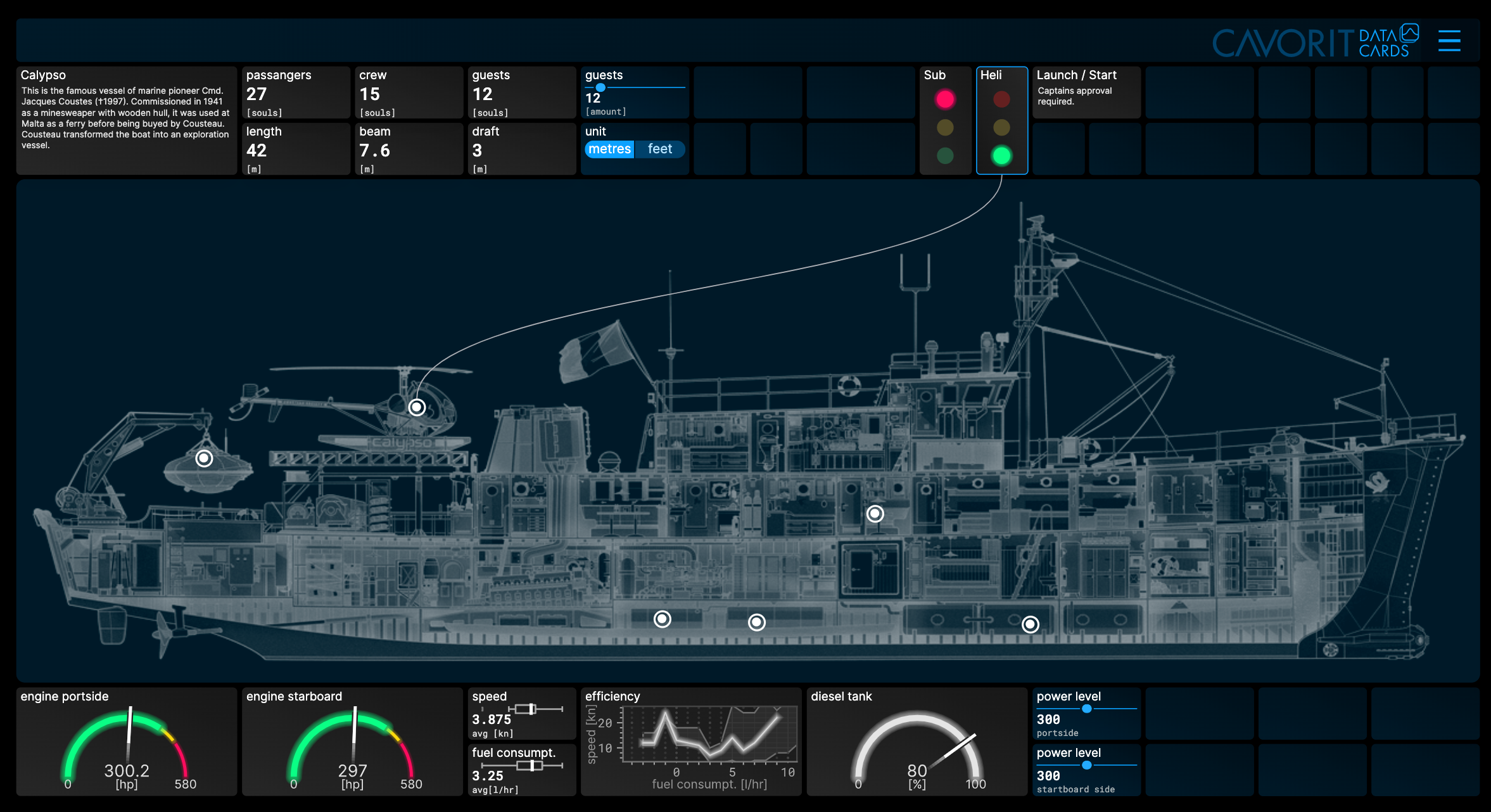
DataCards streamlines the way teams design data and AI workflows, enabling everybody to deploy digital twins, dashboards, and apps in minutes instead of months.
DECK
Calypso Live Status
Share
Explore DataCards ↗
Want to know more?
Contact us.
Schedule a quick call ↗
Email us

Contact
The Double T-Shaped Knowledge Architecture:
Where Human and Machine Intelligence Converge
In an era where organizational silos strangle innovation and knowledge fragmentation limits growth, we need a fundamentally new approach to how expertise flows through companies. The Double T-Shaped Knowledge Architecture represents this paradigm shift: A framework where human collaboration patterns and artificial intelligence mirror each other to create exponential knowledge leverage.
Inspired by the Bauhaus vision, the Cathedral Principle recognizes that great works require both craftsmen and architects. DataCards enables this through two modes of expertise:
- Specialists dive deepData scientists perfecting algorithms, domain experts crystallizing insights into notebooks. They publish their work with pride.
- Generalists connect wideSolution architects orchestrating technical landscapes, program managers synthesizing strategic vision across decks. They navigate and drill down through layers of expertise.
This information zoom creates transparent collaboration across departments, breaking down silos through structured knowledge exchange.
DataCards implements the same T-shaped pattern at the machine layer:
Specialist AI agents master individual notebooks, becoming domain-specific experts that learn from human specialists with surgical precision.
Generalist AI assistants understand entire project instances, bridging contexts and orchestrating specialist AI capabilities across the platform.
This creates a three-layer architecture: human-to-human collaboration, human-to-machine assistance, and machine-to-machine coordination. Each layer reinforces the T-shaped principle, compounding knowledge vertically.
Here's the elegant twist: When AI agents build directly upon your notebooks, poor maintenance immediately degrades AI performance. This creates a natural expert motivation loop—specialists improve their work because their AI partner's effectiveness depends on it.
The result? Compound knowledge effects. Well-structured notebooks become training grounds for AI agents that multiply your expertise across the organization. Documentation quality pays exponential returns through AI-powered knowledge distribution.
The Double T-Shaped Knowledge Architecture recognizes that the future of work isn't human or machine intelligence—it's the deliberate architecture of how they interweave.
When specialist humans teach specialist AI agents, and generalist humans coordinate with generalist AI assistants, expertise flows frictionlessly from depth to breadth, amplified at every layer by intelligent automation.
This is how modern cathedrals get built—through infrastructure where craftsmen and architects, depth and breadth, human and machine intelligence all collaborate toward a singular vision.
DataCards?
DataCards is a collaborative platform where data science meets organizational intelligence. It combines the flexibility of notebooks and AI agents with drag and drop frontend components, creating a workspace where specialists dive deep into technical work while generalists maintain strategic oversight.
The Human T-Shape: The Cathedral Principle
The Machine T-Shape: AI That Mirrors Human Patterns
The Excellence Engine
A New Operating System for Organizational Intelligence
cavorit datacards

The algorithm warehouse.
We’ve launched DataCards — our first standalone product, built on over a decade of experience in data and software innovation.
DataCards streamlines the way teams design data and AI workflows, enabling everybody to deploy digital twins, dashboards, and apps in minutes instead of months.
DECK
Calypso Live Status
Share
Explore DataCards ↗
Want to know more?
Contact us.
Schedule a quick call ↗
Email us
Contact
The Double T-Shaped Knowledge Architecture:
Where Human and Machine Intelligence Converge
In an era where organizational silos strangle innovation and knowledge fragmentation limits growth, we need a fundamentally new approach to how expertise flows through companies. The Double T-Shaped Knowledge Architecture represents this paradigm shift: A framework where human collaboration patterns and artificial intelligence mirror each other to create exponential knowledge leverage.
The Human T-Shape: The Cathedral Principle
Inspired by the Bauhaus vision, the Cathedral Principle recognizes that great works require both craftsmen and architects. DataCards enables this through two modes of expertise:
- Specialists dive deepData scientists perfecting algorithms, domain experts crystallizing insights into notebooks. They publish their work with pride.
- Generalists connect wideSolution architects orchestrating technical landscapes, program managers synthesizing strategic vision across decks. They navigate and drill down through layers of expertise.
This information zoom creates transparent collaboration across departments, breaking down silos through structured knowledge exchange.
DataCards?
DataCards is a collaborative platform where data science meets organizational intelligence. It combines the flexibility of notebooks and AI agents with drag and drop frontend components, creating a workspace where specialists dive deep into technical work while generalists maintain strategic oversight.
The Machine T-Shape: AI That Mirrors Human Patterns
DataCards implements the same T-shaped pattern at the machine layer:
Specialist AI agents master individual notebooks, becoming domain-specific experts that learn from human specialists with surgical precision.
Generalist AI assistants understand entire project instances, bridging contexts and orchestrating specialist AI capabilities across the platform.
This creates a three-layer architecture: human-to-human collaboration, human-to-machine assistance, and machine-to-machine coordination. Each layer reinforces the T-shaped principle, compounding knowledge vertically.
The Excellence Engine
Here's the elegant twist: When AI agents build directly upon your notebooks, poor maintenance immediately degrades AI performance. This creates a natural expert motivation loop—specialists improve their work because their AI partner's effectiveness depends on it.
The result? Compound knowledge effects. Well-structured notebooks become training grounds for AI agents that multiply your expertise across the organization. Documentation quality pays exponential returns through AI-powered knowledge distribution.
A New Operating System for Organizational Intelligence
The Double T-Shaped Knowledge Architecture recognizes that the future of work isn't human or machine intelligence—it's the deliberate architecture of how they interweave.
When specialist humans teach specialist AI agents, and generalist humans coordinate with generalist AI assistants, expertise flows frictionlessly from depth to breadth, amplified at every layer by intelligent automation.
This is how modern cathedrals get built—through infrastructure where craftsmen and architects, depth and breadth, human and machine intelligence all collaborate toward a singular vision.
cavorit datacards

The algorithm warehouse.
We’ve launched DataCards — our first standalone product, built on over a decade of experience in data and software innovation.
DataCards streamlines the way teams design data and AI workflows, enabling everybody to deploy digital twins, dashboards, and apps in minutes instead of months.
DECK
Calypso Live Status
Share
Explore DataCards ↗
Want to know more?
Contact us.
Schedule a quick call ↗
Email us